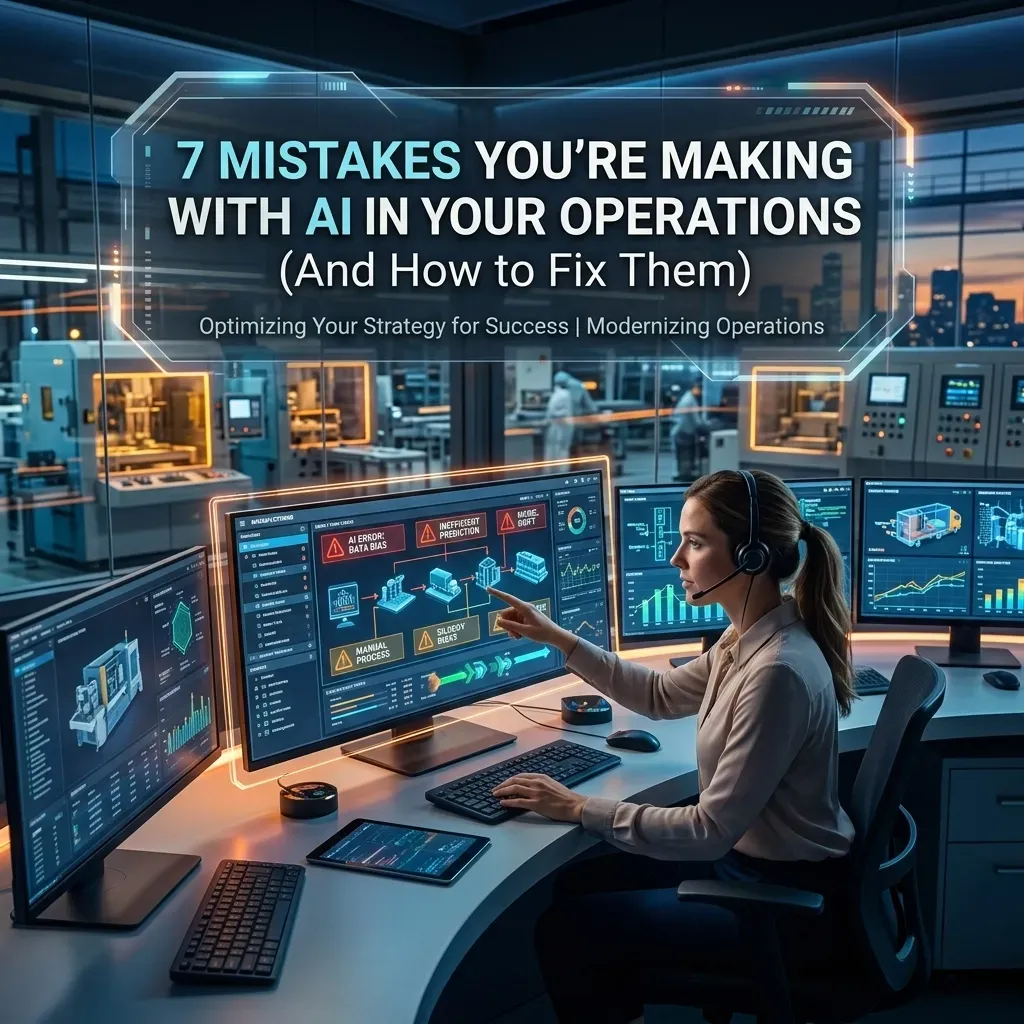
7 Mistakes You’re Making with AI in Your Operations (And How to Fix Them)
Estimated Read Time: 7 minutes
Let’s be real for a second: Are you actually using AI to scale your business, or are you just collecting $20-a-month subscriptions like they’re digital Pokémon cards?
We’ve all been there. You see a flashy demo on LinkedIn, your "founder brain" lights up with the promise of 10x productivity, and you immediately sign up. But three weeks later, your inbox is still a disaster, your team is confused, and you’re still the primary bottleneck for every single decision.
At OPS Framework, we talk to founders every day who are "winging it" with AI. They’re using ChatGPT as a high-tech band-aid for broken processes. But here’s the truth: AI won’t fix a broken business; it will only make it break faster.
If you want to move from "overwhelmed bottleneck" to "visionary leader," you have to stop making these seven common operational mistakes. Let’s dive into how you can shift your strategy so that Success is Certain.
Mistake #1: Buying the Software Before Building the Process
This is the "shiny object syndrome" at its peak. You buy a fancy AI-driven CRM or a project management tool before you’ve actually mapped out how a lead becomes a client.
When you put "software before process," you aren’t automating; you’re just digitizing chaos. If your manual process is clunky, adding AI only ensures that the clunkiness happens at the speed of light.
How to Fix It:
Stop. Put the credit card away. Before you touch a single AI tool, you need to map out your workflow. Use our 3-Step Reset for Smarter Growth to identify where the friction actually lives. Only once the process is documented and proven to work manually should you look for an AI tool to accelerate it.
Mistake #2: Starting with Tech Instead of Outcomes
Why are you using AI? If your answer is "because everyone else is," you’ve already lost. Many founders select tools based on capability rather than utility. They see that a tool can generate 500 blog posts in an hour, so they do it: without asking if their audience actually wants 500 blog posts.
How to Fix It:
Flip the script. Start with the business outcome you want to achieve. Do you need to reduce customer support response time? Do you need to increase your outbound sales volume? Once the goal is clear, the AI tool becomes a tactical choice, not a guessing game.
Mistake #3: The "Set It and Forget It" Mindset
AI is not a Crock-Pot. You can’t just "set it and forget it." Many organizations treat AI as a static feature, but models "drift," data patterns change, and user behavior shifts. If you aren’t monitoring the outputs, you’ll eventually find yourself making decisions based on hallucinations or outdated logic.
How to Fix It:
We use the A.I.M. to Win framework to ensure our operations stay sharp:
Action Plan: Define exactly what the AI is responsible for.
Implement: Roll it out in a controlled "pilot" environment first.
Measure: Constantly audit the results. Is it actually saving time? Is the quality holding up?
If you aren't measuring, you aren't managing.
Mistake #4: Ignoring Data Quality (The "Garbage In, Garbage Out" Rule)
AI is only as smart as the data you feed it. If your customer records are fragmented across three different spreadsheets and a Slack channel, your "AI Sales Rep" is going to look like an idiot. Research shows that data quality is the #1 obstacle to AI success for nearly 43% of organizations.
How to Fix It:
Audit your data sources. Clean up your CRM. Ensure your internal documentation is centralized. If you want AI to help you scale, you need a single source of truth. Think of your data as the fuel: if you put low-grade "garbage" in the tank, don't be surprised when the engine stalls.
Mistake #5: Creating "AI Silos"
Is your marketing team using AI for copy while your operations team is completely in the dark? When AI is used in silos, you create disconnected workflows. Marketing might be pumping out leads that Operations can’t handle because the systems don’t talk to each other.
How to Fix It:
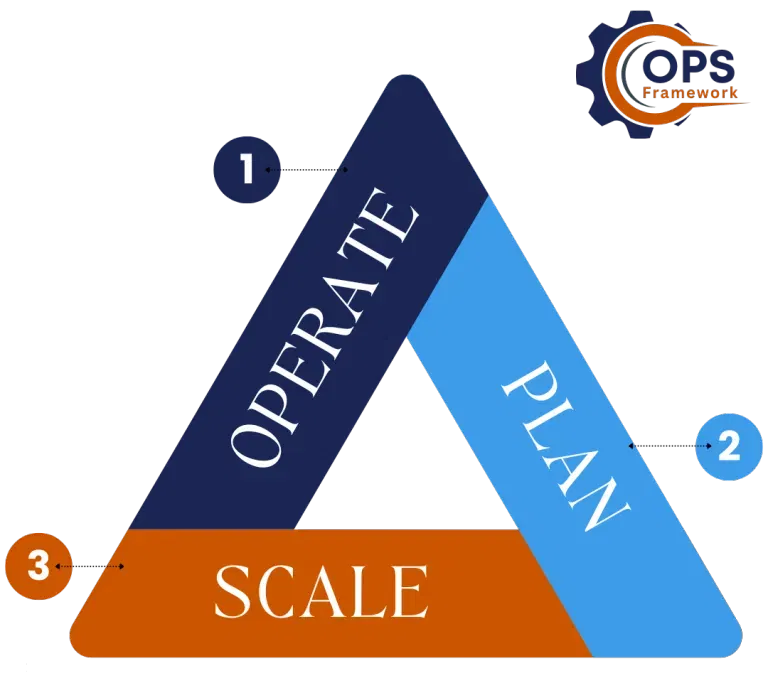
Integrate AI into your core system design. At OPS Framework, we look at the entire cycle: Operate, Plan, and Scale. AI should be a thread that runs through all three. When your AI tools are integrated via APIs and shared workflows, the whole business moves in sync. Check out our Fractional COO Playbook to see how we bridge these gaps for scaling companies.
Mistake #6: Overcomplicating and Scaling Too Fast
We see this all the time: a founder tries to automate their entire customer journey, sales funnel, and back-office accounting all in one weekend. They scale the implementation before they’ve validated the assumptions. The result? A massive bill and a team that is more stressed than they were before the "solution" arrived.
How to Fix It:
Think big, but start small. Run a pilot. Maybe start by using AI to create 5 blogs in 2 hours instead of trying to automate your entire content department. Once you master one small use case, move to the next.
Real-world example: how structure beats “winging it” with AI
One customer grabbed the Create 5 Blogs in 2 Hours e-guide because they were stuck in the classic content bottleneck: lots of ideas, zero consistency, and every blog felt like starting from scratch. They’d “try AI” on random Tuesdays, generate a few drafts, and then disappear for weeks because nothing was connected to a workflow.
Here’s what changed when they stopped improvising and started following a simple structure:
They built a consistent blog workflow (instead of relying on motivation): they set a recurring 2-hour block, followed the e-guide’s steps, and walked away with 5 drafts in a single sitting—every week.
They used keyword ideas people were actually searching for: instead of guessing topics, they pulled keyword themes first, then used AI to outline and draft content that matched real demand. Their posts got more relevant fast because they were answering existing questions, not creating “hope it works” content.
They unlocked a missing side of their business: once they saw which keywords were gaining traction, it revealed an entire category of customer needs they weren’t speaking to at all. That insight didn’t just improve the blog—it shaped new offers, new messaging, and clearer positioning.
The visibility bump wasn’t magic. It was predictable. Because the win wasn’t “AI wrote better.” The win was: they finally had a repeatable operating system for content, and AI became the accelerator not the strategy.

Mistake #7: Forgetting That AI Doesn't Make Decisions: You Do
This is the biggest mistake of all. Founders often hope AI will tell them where to take the company. But AI is an execution engine, not a visionary.
In my keynotes, I often talk about the theme "Success is Certain." But success isn't certain because of the technology you use; it’s certain because of the decisions you make and the structure you build. AI can help you reach the summit faster, but it can’t pick the mountain for you.
How to Fix It:
Use AI to clear the "busy work" from your plate so you have the mental space to lead. If you are still the bottleneck in your business, no amount of AI will save you. You need to step into the role of the architect. Use AI to handle the how, so you can focus on the why.
The Path Forward: From Chaos to Certainty
Scaling a business in 2026 isn't about who has the most AI tools; it’s about who has the best Operating System.
If you’re tired of "winging it" and you’re ready to stop being the bottleneck, it’s time to move from ad-hoc fixes to a structured framework. Whether it’s mastering your OKRs or implementing a full business operating system, the goal is the same: freedom and scalability.
Ready to stop guessing and start growing?
Identify your biggest hurdle: Take our Bottleneck Assessment to see where your growth is actually getting stuck.
A.I.M. for Results: Apply the Action, Implement, Measure framework to your next project.
Let’s Talk: If you’re ready to implement a system that makes success inevitable, book a connection call. We’ll help you clear the clutter and build a business that runs like a well-oiled machine: with or without the AI hype.
Success isn't an accident. It’s a framework. Let’s build yours.